
Online consultation booking
Let clients book an initial consultation or follow-up without a phone call. Your site can connect to your preferred scheduling system and explain what each appointment involves before anyone commits.
Websites for nutritionists and dietitians
Build a professional website that explains your expertise clearly, earns a visitor's trust and turns more of them into consultation enquiries.
Kwise Web designs custom websites for independent nutritionists, registered dietitians and nutrition coaches. Each site is planned around your services, your ideal clients and the way your practice runs, rather than squeezed into a generic healthcare template. Launching a new private practice or replacing an outdated site, you get a credible online presence that makes it easy for potential clients to understand your approach and take the next step.
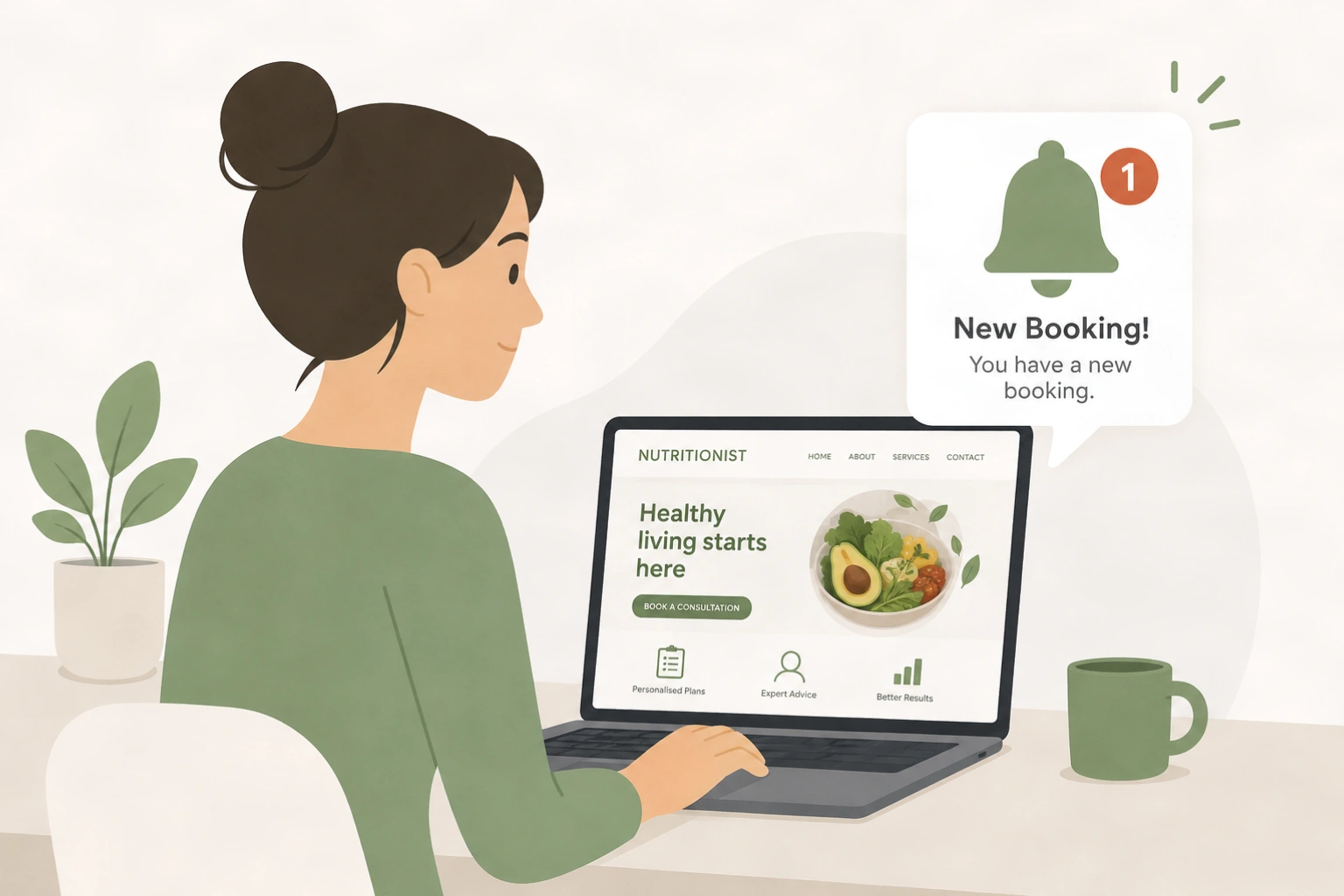
What potential clients ask first
Your website should do more than look professional. Before anyone books, they need the questions above settled. Our design process answers them on the page, then guides each visitor towards a sensible next action: booking a discovery call, sending an enquiry or buying a programme. The result is a website that supports the way your practice actually operates, not a brochure that sits online doing nothing.
Let clients book an initial consultation or follow-up without a phone call. Your site can connect to your preferred scheduling system and explain what each appointment involves before anyone commits.
Take payment for consultations, packages, workshops or digital products through a trusted payment provider. Payment sits inside the booking journey rather than bolted on at the end.
Collect the details you need before an appointment with structured enquiry and intake forms. Fewer back-and-forth emails, and a better-prepared first session for both of you.
Connect your email platform so visitors can subscribe to resources, newsletters or programme updates. It keeps you in touch with people who are interested but not ready to book yet.
Present one-to-one packages, group programmes, memberships and online courses with plain-English benefits, honest pricing and an obvious way to sign up.
Most clients will find you on a phone. Your content, service pages and booking flow will work properly on phones, tablets and desktops, with no pinching or guesswork.
Every page gets a clear purpose, a logical heading structure and focused content. Search engines understand your services, and real visitors find what they came for.
Specialist practices
People search for the specific help they need, not for nutrition in general. If your practice specialises, your website should say so on the first screen instead of hiding it behind broad wording. Each specialism can have its own focused page, so visitors land on information that matches their situation and search engines understand exactly what you offer.
Areas we can build pages around
A template gets you online quickly, but it does not give you an effective client journey. Many nutritionist websites share the same faults: vague messaging, long unbroken blocks of text, hidden pricing, weak calls to action and no clear difference between one service and the next.
A custom nutritionist website deals with those problems at the planning stage. Content, page structure and functionality are shaped around your practice instead of being trimmed to fit a pre-built layout. That gives you far more control over how your expertise comes across, and over how visitors move from researching your services to contacting you.
How it works
Six steps, from first conversation to launch. You see the plan and the design before anything is built, so there are no surprises at the end.
We work out who your ideal clients are, which services matter most to your income, and what you want visitors to do on each page.
We plan the pages your site needs. That usually means a homepage, about page, service pages, a booking page, resources and answers to common client questions.
We set a visual direction that reflects your brand and feels professional without turning cold or clinical.
The approved design becomes a responsive, accessible website you can manage without calling a developer for every small change.
We connect the tools your practice relies on: appointment scheduling, enquiry forms, payment processing and email marketing.
We test across common screen sizes, put the site live and show you how to update the parts you'll manage yourself.
Potential clients do not book because a website looks attractive. They book when they understand what you offer, believe you can help and feel confident about the next step. Your website should make that decision easy: communicate your value, support the way you work and give prospective clients a clear way to get started.
A nutritionist website should explain who you help, the problems you address, your qualifications, your services and how clients can start working with you. It also needs clear calls to action, contact details, relevant policies and answers to the questions clients ask before booking.
It depends on the number of pages, the design work involved and the integrations you need. A straightforward informational site costs less than one with online payments, courses, memberships or a custom booking workflow. Send a short brief and you'll get a fixed price.
Yes. An appointment scheduling system can be connected to the site so clients see your availability and book the right type of consultation themselves.
Yes. Payment integration can cover individual consultations, service packages, nutrition programmes and digital products, handled through a trusted payment provider.
Yes. The structure and content can be adapted for registered dietitians, private nutrition practices and specialist healthcare professionals, including the credential and registration details clients look for.
The site is built with a search-friendly page structure, metadata, headings and internal links. Development alone does not guarantee rankings, though. Competitive visibility also needs useful content, credible expertise and ongoing work after launch.
These pages put the nutritionist website offer alongside the wider small-business service, pricing and examples.
The broader fixed-price website service for appointment-led local businesses.
A plain-English guide to website pricing, scope, support, and sensible launch decisions.
See how proof, service clarity, and enquiry paths are handled across example websites.
Send a short brief for a nutritionist website, a redesign, or a website audit.
Send a short brief and Kwise Web will recommend a fixed-price structure for your services, specialisms, booking flow and the integrations your practice needs.