
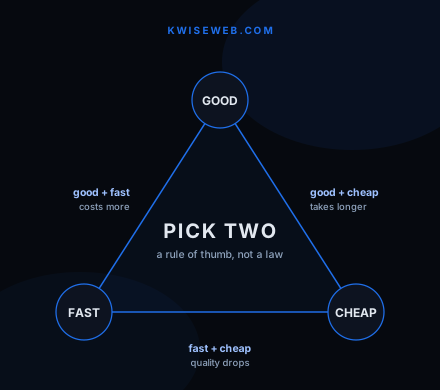
Where the pick-two rule comes from
Martin Barnes, a British engineer and project management specialist, is associated with a triangle built around time, cost, and quality in the late 1960s. Many later versions use scope, time, and cost, with quality shaped by how the three are balanced. The pub version is simpler: good, fast, cheap, pick two.
The rule describes a tendency, not a law. Good work takes skill and time, so a shorter deadline or smaller budget puts pressure somewhere. Price also reflects scope, overheads, reusable components, automation, and the provider's business model. A well-run, repeatable service has more room than the slogan suggests.
More people don't automatically make a project faster. They also create coordination, handovers, and more chances for work to queue up. Past a point, the overhead cancels out the extra capacity.
The trade-offs behind the triangle
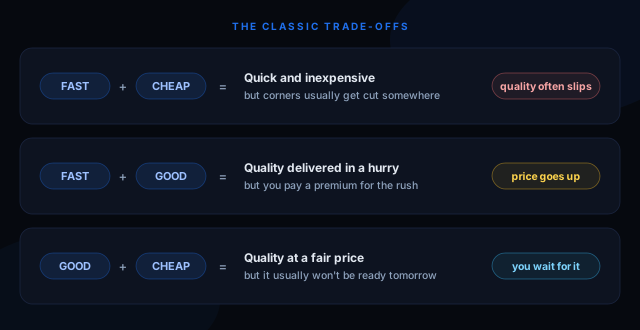
The triangle gives you three familiar pairings to test a quote against. Real projects are messier, but each pairing highlights a pressure worth checking.
A very cheap, very quick quote should prompt a simple question: what has been reduced or standardised? High quality on a tight deadline usually costs more. Good bespoke work at a modest price often takes longer. A surprising quote isn't automatically wrong; it just needs a clear explanation.
What cheap website design may not include
Cheap website design isn't automatically a bad buy. Plenty of businesses only need a straightforward online presence, and a modest template site can do that job perfectly well.
What varies is what's included. Some low-cost services cover keyword research, copywriting, local search structure, and proper testing. Others sell the build and leave the rest to you. Check before you compare prices. Without those elements, the site may be less able to compete for non-branded local searches or convince visitors comparing several businesses. It can still support referrals, branded searches, directory traffic, advertising, and visits from your Google Business Profile.
The risk is a mismatch between what you bought and what you expected it to do. A simple online business card is fine if that was the brief. Buy the same site expecting it to compete for local work, and the saving may disappear into an early rebuild.
Paying for speed, and what it buys
Need a solid site live for a season or contract deadline? An experienced team may compress the schedule by prioritising your job over others. The premium mostly buys priority, much like next-day delivery.
It cannot remove the thinking. Briefing, decisions, and feedback still take time, and adding people has diminishing returns. A rush premium makes sense only when the deadline has real commercial value.
For bespoke work, good and affordable often means waiting
Bespoke or heavily customised work is different. A freelancer fitting it around larger jobs, or a studio offering a lower price for a flexible deadline, can still deliver good work at a fair cost. The trade is the calendar, and 'a few weeks' can easily stretch.
That may be fine if the current site still works. The risk is drift: long projects lose momentum, decisions get delayed, and a half-built site is expensive even when the quote was cheap.
How a tight scope bends the triangle
The good-fast-cheap slogan leaves out scope, even though scope is central to many project-management models. Change the amount or complexity of the work and the balance changes with it.
A service that builds the same kind of site repeatedly can reuse page layouts, components, and a refined process. The content still changes, but the delivery does not start from zero. That repeatability can make a build good, reasonably quick, and affordable.
The word that matters is 'scoped'. Bespoke design, unusual features, unlimited revisions, or a moving brief bring the usual pressures back into play.
What happens after launch
How much website maintenance and support you need depends on the build. A static brochure site may need little beyond hosting, domain renewals, and occasional edits. A CMS with plugins needs software and security updates. An actively marketed site also needs fresh content and optimisation.
We've taken on sites where the original builder stopped replying and the owner did not know who controlled the domain or hosting. Before paying a deposit, ask who owns both and what happens when you need a change. Aftercare may be included, limited, separately priced, or unavailable. Get the answer in writing.
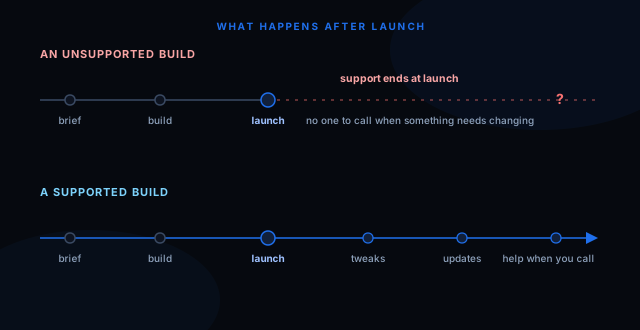
If you want to see what a fixed scope looks like in practice, the website design services page sets out what each package includes and what support looks like after launch.
How to compare website quotes
When you compare website design quotes, start with the job the site needs to do. A tidy reference point for existing contacts can be modest. A site expected to attract new work needs more thought around scope, quality, and upkeep.
Check the scope line by line. Does the price cover copywriting, local search work, testing, and revisions? Who owns the domain and hosting? What does support cost after launch? You do not need a perfect answer. You need a specific one. Vagueness here is a warning.
Where Kwise Web sits in all this
We manage the trade-offs by keeping the scope clear and the process repeatable. Our fixed packages cover the pages a small local business typically needs, with copywriting, local search basics, and mobile testing included. We use the same tested component system and delivery workflow on each build, then adapt the content and details to the business. That is where the efficiency comes from.
Support continues after launch. Services, prices, opening hours, contact details, and offers change, and legal or compliance information may occasionally need updating. If a previous builder has gone quiet, we can review what you have and explain the practical next step.